The Main Purpose: God's Kingdom
Please reach us at info@theuniversalunity.com if you cannot find an answer to your question.
The kingdom of God isn't just about heaven, or a place, or the future. It's here and everywhere, right now. When we hear the word “kingdom,” we imagine an area of land or territory controlled by a royal official. And while this was certainly part of the ancient imagination that gave birth to the idea of “the kingdom of God,” it cannot fully encompass it. The kingdom is not a place, really. God’s kingdom is when God alone rules and laws and when God’s wills for the world are fully present. The kingdom is here and everywhere.
[The New Testament, Luke 20-21] Once, on being asked by the Pharisees when the kingdom of God would come, Jesus replied, “The coming of the kingdom of God is not something that can be observed, nor will people say, ‘Here it is,’ or ‘There it is,’ because the kingdom of God is in your midst.”
There are two essential requirements to enter God’s Kingdom. God’s Kingdom comes to our midst when people of faith turn to GOD in a firm repentance (1) — this is like being born again — and follow His commandments (2).
1) Firm Repentence
[The Final Testament 66:8]: O you who believe, you shall repent to GOD a firm repentance. Your Lord will then remit your sins and admit you into gardens with flowing streams. On that day, GOD will not disappoint the prophet and those who believed with him. Their light will radiate in front of them and to their right. They will say, “Our Lord, perfect our light for us, and forgive us; You are Omnipotent.”
[The New Testament, Mark 1:15] “The time has come,” he said. “The kingdom of God has come near. Repent and believe the good news!”
[The Final Testament 11:52] “O my people, seek forgiveness from your Lord, then repent to Him. He will then shower you with provisions from the sky, and augment your strength. Do not turn back into transgressors.”
[The Final Testament 28:67] As for those who repent, believe, and lead a righteous life, they will end up with the winners.
[The New Testament, John 3:3-5] Jesus replied, “Very truly I tell you, no one can see the kingdom of God unless they are born again.” “How can someone be born when they are old?” Nicodemus asked. “Surely they cannot enter a second time into their mother’s womb to be born!” Jesus answered, “Very truly I tell you, no one can enter the kingdom of God unless they are born of water and the Spirit.
2) Following the Commandments
"How can I enter God's Kingdom?" Jesus's answer: "Follow the commandments"
[The New Testament, Matthew 19:16-17] Just then a man came up to Jesus and asked, “Teacher, what good thing must I do to get eternal life?” “Why do you ask me about what is good?” Jesus replied. “There is only One who is good. If you want to enter life, keep the commandments.”
(Editor’s note: 'God's mercy' or 'to attain mercy' refers to God’s Kingdom in the Final Testament.)
[The Final Testament 6:155] This too is a blessed scripture that we have revealed; you shall follow it and lead a righteous life, that you may attain mercy.
[The Final Testament 7:204] When the Quran is recited, you shall listen to it and take heed, that you may attain mercy.
Formula for Success
[24:56] You shall observe the Contact Prayers (Salat) and give the obligatory charity (Zakat), and obey the messenger, that you may attain mercy.
[The New Testament, Matthew 5:17-20] “Do not think that I have come to abolish the Law or the Prophets; I have not come to abolish them but to fulfill them. For truly I tell you, until heaven and earth disappear, not the smallest letter, not the least stroke of a pen, will by any means disappear from the Law until everything is accomplished. Therefore anyone who sets aside one of the least of these commands and teaches others accordingly will be called least in the kingdom of heaven, but whoever practices and teaches these commands will be called great in the kingdom of heaven. For I tell you that unless your righteousness surpasses that of the Pharisees and the teachers of the law, you will certainly not enter the kingdom of heaven.
The Kingdom of God is characterized by perfect health, perfect wealth, and perfect happiness— now and forever. In other words, when you enter the Kingdom of God, great blessings and a perfect life await you. This may sound unbelievable, or it may be perceived as a person deceiving themselves with an optimistic mindset or distributing empty promises. Do not forget this: these are now scientific, provable, examinable physical realities.
Regarding this fundamental truth, God sent the scriptures and messengers so that we might believe, and He supported all of this with the great mathematical miracle. Please read the verses of the Final Testament that I will present below, keeping in mind that they are supported by a mathematical, absolutely undeniable code.
We now KNOW that every letter and every word of the verses below comes from God—the Omnipotent, the Omnicient and the Almighty. Anyone who appreciates the Quran’s 19-based mathematical code will understand that these promises are not illusions and will shape his/her plans and practices of their life accordingly.
Now, please read the mathematically proven verses of the Final Testament below regarding promises of God's Kingdom.
Happiness: Now and Forever*
[10:62] Absolutely, GOD’s allies have nothing to fear, nor will they grieve.
*10:62-64 Most people think that they have to wait until the Day of Resurrection before they receive their rewards for righteousness, or the retribution for wickedness. But the Quran repeatedly assures the believers that they are guaranteed perfect happiness here in this world, now and forever. At the end of their interim here, they go directly to Paradise (see Appendix 17).
[10:63] They are those who believe and lead a righteous life.
[10:64] For them, joy and happiness in this world, as well as in the Hereafter. This is GOD’s unchangeable law. Such is the greatest triumph.
Guaranteed Happiness Now and Forever
[16:97] Anyone who works righteousness, male or female, while believing, we will surely grant them a happy life in this world, and we will surely pay them their full recompense (on the Day of Judgment) for their righteous works.
Happiness Now, and Forever
[22:15] If anyone thinks that GOD cannot support him in this life and in the Hereafter, let him turn completely to (his Creator in) heaven, and sever (his dependence on anyone else). He will then see that this plan eliminates anything that bothers him.
Perfect Happiness:Now and Forever
[41:30] Those who proclaim: “Our Lord is GOD,” then lead a righteous life, the angels descend upon them: “You shall have no fear, nor shall you grieve. Rejoice in the good news that Paradise has been reserved for you.
Abraham
[16:120] Abraham was indeed an exemplary vanguard in his submission to GOD, a monotheist who never worshiped idols.
[16:121] Because he was appreciative of His Lord’s blessings, He chose him and guided him in a straight path.
[16:122] We granted him happiness in this life, and in the Hereafter he will be with the righteous.
[39:17] As for those who discard the worship of all idols, and devote themselves totally to GOD alone, they have deserved happiness. Give good news to My servants.
[2:62] Surely, those who believe, those who are Jewish, the Christians, and the converts; anyone who (1) believes in GOD, and (2) believes in the Last Day, and (3) leads a righteous life, will receive their recompense from their Lord. They have nothing to fear, nor will they grieve.
[2:112] Indeed, those who submit themselves absolutely to GOD alone, while leading a righteous life, will receive their recompense from their Lord; they have nothing to fear, nor will they grieve.
Divine Guarantee
[2:277] Those who believe and lead a righteous life, and observe the Contact Prayers (Salat), and give the obligatory charity (Zakat), they receive their recompense from their Lord; they will have nothing to fear, nor will they grieve.
[3:170] They are rejoicing in GOD’s grace, and they have good news for their comrades who did not die with them, that they have nothing to fear, nor will they grieve.
Perfect Security for Believers
[6:82] Those who believe, and do not pollute their belief with idol worship, have deserved the perfect security, and they are truly guided.
[93:8] He found you poor, and made you rich.
Now let's look at the parts of the Bible which the Final Testament confirms. Remember, the great miracle of 19 confirms the words and verses the Final Testament and the Final Testament purifies and confirms the true Bible.
[Matthew 6:33] But seek first His Kingdom and His righteousness, and all these things will be given to you as well.
[Mark 4:26-29] He also said, “This is what the kingdom of God is like. A man scatters seed on the ground. Night and day, whether he sleeps or gets up, the seed sprouts and grows, though he does not know how. All by itself the soil produces grain—first the stalk, then the head, then the full kernel in the head. As soon as the grain is ripe, he puts the sickle to it, because the harvest has come.”
[Luke 13:18-21] Then Jesus asked, “What is the kingdom of God like? What shall I compare it to? It is like a mustard seed, which a man took and planted in his garden. It grew and became a tree, and the birds perched in its branches.” Again he asked, “What shall I compare the kingdom of God to? It is like yeast that a woman took and mixed into about sixty pounds of flour until it worked all through the dough.”
Psalm 91
1 Whoever dwells in the shelter of the Most High
will rest in the shadow of the Almighty.
2 I will say of the Lord, “He is my refuge and my fortress,
my God, in whom I trust.”
3 Surely he will save you
from the fowler’s snare
and from the deadly pestilence.
4 He will cover you with his feathers,
and under his wings you will find refuge;
his faithfulness will be your shield and rampart.
5 You will not fear the terror of night,
nor the arrow that flies by day,
6 nor the pestilence that stalks in the darkness,
nor the plague that destroys at midday.
7 A thousand may fall at your side,
ten thousand at your right hand,
but it will not come near you.
8 You will only observe with your eyes
and see the punishment of the wicked.
9 If you say, “The Lord is my refuge,”
and you make the Most High your dwelling,
10 no harm will overtake you,
no disaster will come near your tent.
11 For he will command his angels concerning you
to guard you in all your ways;
12 they will lift you up in their hands,
so that you will not strike your foot against a stone.
13 You will tread on the lion and the cobra;
you will trample the great lion and the serpent.
14 “Because he loves me,” says the Lord, “I will rescue him;
I will protect him, for he acknowledges my name.
15 He will call on me, and I will answer him;
I will be with him in trouble,
I will deliver him and honor him.
16 With long life I will satisfy him
and show him my salvation.”
Satan’s kingdom is characterized by disease, wars, disasters, problems, divorces — in short, chaos. This condition stems from the fact that Satan is not omnipotent. He wants to be a god and wishes to make everything perfect, but he simply does not have the power to do so. As a result, he causes great suffering among his subjects.
In this situation, just like tyrannical rulers who oppress their people and cause them to live miserable lives, Satan begins to lie to his followers. He claims that pain, illness, and chaos are actually good things. For this reason, traditional religions are filled with false doctrines fabricated by those who have fallen victim to Satan.
For example, according to a fabricated Hadith falsely attributed to Muhammad, those who suffer the most are the ones closest to God. Satan cannot grant his subjects perfect happiness, perfect prosperity, or perfect health.
In contrast, God’s Kingdom is characterized by perfect happiness, perfect wealth, and perfect health. Because God is Omnipotent, He does not allow His citizens to suffer or live in misery. As long as you are in God’s Kingdom, everything in your life will be arranged for your benefit — in ways that may even astonish you. Even your most complex and difficult problems will be resolved, because there is nothing God cannot do.
For this reason, the subject of “Knowing God” is of great importance. It is essential that you revisit the article on this page about “Greatness of God.”
For further information, please watch the following video on our YouTube channel:
King of Chaos | by Dr. Rashad Khalifa
Satan's kingdom vs God's Kingdom | by Dr. Rashad Khalifa
Secret of Happiness and God's Kingdom | by Dr. Rashad Khalifa
Entry into God’s Kingdom is attained through a firm repentance, and it is made lasting by living in obedience to His laws and commandments. However, a person exits God’s Kingdom by committing sin. You cannot remain in God’s Kingdom with even a single sin. One must be purified from sin.
This purification happens either through immediate repentance for sins committed in ignorance, or by paying the due consequences for other sins, thereby being relieved of their burden.
Remember, we fell out of God’s Kingdom by committing the greatest sin — idolatry. Our parents, Adam and Eve, were expelled from God’s Kingdom as a result of sin. Therefore, we must never take any sin lightly, not even the smallest ones. We must be extremely sensitive and vigilant against sin.
The exact phrase “kingdom of God” does not show up in the Old Testament (although “kingdom of the Lord” does appear in 2 Chronicles 13:8; see also the talk of God’s kingdom in Daniel [for example, Dan 6:26]). Despite this fact, the concept of God’s kingship is present throughout the Old Testament and is vital if we are going to make sense of Jesus’ preaching about the kingdom of God. Remember: Jesus simply announces that the kingdom is “at hand” (Matt 3:2), assuming that his hearers had some grasp of what he meant, even if he knew that they did not fully understand him.
As Psalm 10:16 says: “The LORD is King forever and ever; the nations perish from His land.” Or as King Jehoshaphat confesses in 2 Chronicles 20:6: “O Lord, God of our fathers, are you not God in heaven? You rule over all the kingdoms of the nations. In your hand are power and might, so that none is able to withstand you.” Or consider King Hezekiah’s exultation in Isaiah 37:16: “O Lord of hosts, God of Israel, enthroned above the cherubim, you are the God, you alone, of all the kingdoms of the earth; you have made heaven and earth.” See also Psalms 93:1-2; 95:3-6; 96:10; 104; 136:1-9. Simply put, God is the sovereign ruler of the universe.
In 1 Samuel 12 the prophet Samuel rebukes Israel for desiring a king that would be just like the greedy, self-serving kings of the nations surrounding Israel. While it was not wrong for Israel to desire a king (more on this below), the reason driving Israel’s request was indeed sinful. As Samuel says in 1 Sam 12:12-13: “The Lord sent Jerubbaal and Barak and Jephthah and Samuel and delivered you out of the hand of your enemies on every side, and you lived in safety. And when you saw that Nahash the king of the Ammonites came against you, you said to me, ‘No, but a king shall reign over us,’ when the Lord your God was your King.” Israel’s desire for a powerful earthly king was driven by fear and earthly-mindedness (see 1 Sam 8:4-9). God’s people failed to rest in the fact that God was their King, and that He would protect His covenant people.
Ben C. Dunson
The Kingdom of God is a central theme throughout the Gospels. John the Baptist was proclaiming, “Repent, for the Kingdom of God is at hand.” The Synoptic Gospels — Matthew, Mark, and Luke — all describe Jesus traveling and preaching the good news of the Kingdom of God. These Gospels also contain fourteen distinct parables about the Kingdom.
Beyond these parables, Jesus gave many additional teachings about the Kingdom of God, which are preserved across all four canonical Gospels. Taken together, these teachings show that the Kingdom of God is already at work and continues to grow, and that it will reach its full manifestation in the future. The Messenger of the Covenant, Rashad Khalifa, confirmed and consolidated the message of Jesus, as prophesied in the Final Testament (3:81, 33:7, 33:40) and in the Bible (Malachi 3:1–3). He therefore proclaimed God’s upcoming Kingdom and clarified the way to enter it.
Repent, The Kingdom is at Hand
John the Baptist’s message was simple, clear, and direct.
Matthew 3:1–2 (NASB)
Now in those days John the Baptist came, preaching in the wilderness of Judea, saying, “Repent, for the kingdom of heaven is at hand.”
Tempting the Messiah
Satan understands that The Kingdom of God being established means the end of his kingdom of darkness. Therefore, Satan attempted to give the Messiah a shortcut to reigning over the kingdoms of the earth. All the Messiah needed to do was worship Satan.
Matthew 4:8–10 (NASB) — see also Luke 4:5–8
Again, the devil took him to a very high mountain and showed him all the kingdoms of the world and their glory; and he said to him, “All these things I will give you, if you fall down and worship me.” Then Jesus said to him, “Go, Satan! For it is written, ‘You shall worship the Lord your God, and serve Him only.’”
Jesus was not interested in submitting to Satan and came to take dominion away from Satan and establish it fully and permanently for God alone.
The Good News of The Kingdom of God
Matthew 4:17 (NASB)
From that time Jesus began to preach and say, “Repent, for the kingdom of heaven is at hand.”
Mark 1:14–15 (NASB)
Now after John had been taken into custody, Jesus came into Galilee, preaching the gospel of God, and saying, “The time is fulfilled, and the kingdom of God is at hand; repent and believe in the gospel.”
Jesus declared that proclaiming The Kingdom of God was his purpose.
Luke 4:43 (NASB)
But he said to them, “I must preach the kingdom of God to the other cities also, for I was sent for this purpose.”
The message of The Kingdom of God is good news!
Matthew 4:23 (NASB)
Jesus was going throughout all Galilee, teaching in their synagogues and proclaiming the gospel of the kingdom, and healing every kind of disease and every kind of sickness among the people.
Matthew 9:35 (NASB)
Jesus was going through all the cities and villages, teaching in their synagogues and proclaiming the gospel of the kingdom, and healing every kind of disease and every kind of sickness.
Matthew 24:14 (NASB)
This gospel of the kingdom shall be preached in the whole world as a testimony to all the nations, and then the end will come.
Luke 16:16 (NASB)
“The Law and the Prophets were proclaimed until John; since that time the gospel of the kingdom of God has been preached, and everyone is forcing his way into it.”
The Centrality of The Kingdom in the Preaching of Jesus
Jesus declared that he had come with the purpose of proclaiming the gospel of The Kingdom of God. Jesus was faithful in fulfilling his purpose.
In the Sermon on the Mount (Matthew 5—7), Jesus refers to The Kingdom explicitly eight times. Some have called this section of Matthew’s Gospel: The Kingdom Manifesto.
Matthew 5:3 (NASB); Cf. Luke 6:20
“Blessed are the poor in spirit, for theirs is the kingdom of heaven.”
Matthew 5:10 (NASB)
“Blessed are those who have been persecuted for the sake of righteousness, for theirs is the kingdom of heaven.”
Matthew 5:19-20 (NASB)
“Whoever then annuls one of the least of these commandments, and teaches others to do the same, shall be called least in the kingdom of heaven; but whoever keeps and teaches them, he shall be called great in the kingdom of heaven.
“For I say to you that unless your righteousness surpasses that of the scribes and Pharisees, you will not enter the kingdom of heaven.”
Matthew 6:10 (NASB)
‘Your kingdom come.
Your will be done,
On earth as it is in heaven.’
Matthew 6:33 (NASB)
But seek first His kingdom and His righteousness, and all these things will be added to you.
Matthew 7:21 (NASB)
“Not everyone who says to me, ‘Lord, Lord,’ will enter the kingdom of heaven, but he who does the will of My Father who is in heaven will enter.”
Parables on The Kingdom
The Sower
Matthew 13:3–9 (NASB)
And he spoke many things to them in parables, saying, “Behold, the sower went out to sow; and as he sowed, some seeds fell beside the road, and the birds came and ate them up. Others fell on the rocky places, where they did not have much soil; and immediately they sprang up, because they had no depth of soil. But when the sun had risen, they were scorched; and because they had no root, they withered away. Others fell among the thorns, and the thorns came up and choked them out. And others fell on the good soil and yielded a crop, some a hundredfold, some sixty, and some thirty. He who has ears, let him hear.”
Matthew 13:18–23 (NASB)
“Hear then the parable of the sower. When anyone hears the word of the kingdom and does not understand it, the evil one comes and snatches away what has been sown in his heart. This is the one on whom seed was sown beside the road. The one on whom seed was sown on the rocky places, this is the man who hears the word and immediately receives it with joy; yet he has no firm root in himself, but is only temporary, and when affliction or persecution arises because of the word, immediately he falls away. And the one on whom seed was sown among the thorns, this is the man who hears the word, and the worry of the world and the deceitfulness of wealth choke the word, and it becomes unfruitful. And the one on whom seed was sown on the good soil, this is the man who hears the word and understands it; who indeed bears fruit and brings forth, some a hundredfold, some sixty, and some thirty.”
Tares Among Wheat
Matthew 13:24–30 (NASB)
Jesus presented another parable to them, saying, “The kingdom of heaven may be compared to a man who sowed good seed in his field. But while his men were sleeping, his enemy came and sowed tares among the wheat, and went away. But when the wheat sprouted and bore grain, then the tares became evident also. The slaves of the landowner came and said to him, ‘Sir, did you not sow good seed in your field? How then does it have tares?’ And he said to them, ‘An enemy has done this!’ The slaves said to him, ‘Do you want us, then, to go and gather them up?’ But he said, ‘No; for while you are gathering up the tares, you may uproot the wheat with them. Allow both to grow together until the harvest; and in the time of the harvest I will say to the reapers, “First gather up the tares and bind them in bundles to burn them up; but gather the wheat into my barn.”’”
Matthew 13:37–43 (NASB)
And He said, “The one who sows the good seed is the Son of Man, and the field is the world; and as for the good seed, these are the sons of the kingdom; and the tares are the sons of the evil one; and the enemy who sowed them is the devil, and the harvest is the end of the age; and the reapers are angels. So just as the tares are gathered up and burned with fire, so shall it be at the end of the age. The Son of Man will send forth His angels, and they will gather out of His kingdom all stumbling blocks, and those who commit lawlessness, and will throw them into the furnace of fire; in that place there will be weeping and gnashing of teeth. Then the righteous will shine forth as the sun in the kingdom of their Father. He who has ears, let him hear.”
The Mustard Seed
Matthew 13:31–32
He presented another parable to them, saying, “The kingdom of heaven is like a mustard seed, which a man took and sowed in his field; and this is smaller than all other seeds, but when it is full grown, it is larger than the garden plants and becomes a tree, so that the birds of the air come and nest in its branches.”
Leaven
Matthew 13:33 (NASB)
He spoke another parable to them, “The kingdom of heaven is like leaven, which a woman took and hid in three pecks of flour until it was all leavened.”
A Valuable Kingdom
Matthew 13:44–46 (NASB)
“The kingdom of heaven is like a treasure hidden in the field, which a man found and hid again; and from joy over it he goes and sells all that he has and buys that field.
“Again, the kingdom of heaven is like a merchant seeking fine pearls, and upon finding one pearl of great value, he went and sold all that he had and bought it.”
An Inclusive Kingdom
Matthew 13:47–50 (NASB)
“Again, the kingdom of heaven is like a dragnet cast into the sea, and gathering fish of every kind; and when it was filled, they drew it up on the beach; and they sat down and gathered the good fish into containers, but the bad they threw away. So it will be at the end of the age; the angels will come forth and take out the wicked from among the righteous, and will throw them into the furnace of fire; in that place there will be weeping and gnashing of teeth.”
A Kingdom of Forgiveness
Matthew 18:23–35 (NASB)
“For this reason the kingdom of heaven may be compared to a king who wished to settle accounts with his slaves. When he had begun to settle them, one who owed him ten thousand talents [a sum equaling 60,000,000 denarii] was brought to him. But since he did not have the means to repay, his lord commanded him to be sold, along with his wife and children and all that he had, and repayment to be made. So the slave fell to the ground and prostrated himself before him, saying, ‘Have patience with me and I will repay you everything.’ And the lord of that slave felt compassion and released him and forgave him the debt. But that slave went out and found one of his fellow slaves who owed him a hundred denarii; and he seized him and began to choke him, saying, ‘Pay back what you owe.’ So his fellow slave fell to the ground and began to plead with him, saying, ‘Have patience with me and I will repay you.’ But he was unwilling and went and threw him in prison until he should pay back what was owed. So when his fellow slaves saw what had happened, they were deeply grieved and came and reported to their lord all that had happened. Then summoning him, his lord *said to him, ‘You wicked slave, I forgave you all that debt because you pleaded with me. Should you not also have had mercy on your fellow slave, in the same way that I had mercy on you?’ And his lord, moved with anger, handed him over to the torturers until he should repay all that was owed him. My heavenly Father will also do the same to you, if each of you does not forgive his brother from your heart.”
(Editor’s note: 'God's mercy' or 'to attain mercy' refers to God’s Kingdom in The Final Testament.)
The Gospels calls people to God’s Kingdom, while the Quran calls them to God’s mercy. The Kingdom is the name of divine sovereignty; mercy is the face of that sovereignty that touches human beings. God’s Kingdom is the harmony of mercy; God’s mercy is the encompassing nature of the Kingdom. In the Gospel, the word “Kingdom” may sound firm, yet its essence is filled with mercy. In the Quran, the word “mercy” may sound gentle, yet its essence is filled with sovereignty.
The concept of the “Kingdom (or Sovereignty) of God” in the Gospels appears in the Quran as “God’s mercy.” Here a few examples:
[7:63] “Is it too much of a wonder that a reminder should come to you from your Lord, through a man like you, to warn you, and to lead you to righteousness, that you may attain mercy?”
Formula for Success
[24:56] You shall observe the Contact Prayers (Salat) and give the obligatory charity (Zakat), and obey the messenger, that you may attain mercy.
[6:155] This too is a blessed scripture that we have revealed; you shall follow it and lead a righteous life, that you may attain mercy.
[7:56] Do not corrupt the earth after it has been set straight, and worship Him out of reverence, and out of hope. Surely, GOD’s mercy is attainable by the righteous.
Requirements For Attaining God’s Mercy: The Importance of Zakat
[7:156] “And decree for us righteousness in this world, and in the Hereafter. We have repented to You.” He said, “My retribution befalls whomever I will. But My mercy encompasses all things. However, I will specify it for those who (1) lead a righteous life, (2) give the obligatory charity (Zakat),* (3) believe in our revelations, and
[7:157] “(4) follow the messenger, the gentile prophet (Muhammad), whom they find written in their Torah and Gospel.* He exhorts them to be righteous, enjoins them from evil, allows for them all good food, and prohibits that which is bad, and unloads the burdens and the shackles imposed upon them. Those who believe in him, respect him, support him, and follow the light that came with him are the successful ones.”
[42:8] Had GOD willed, He could have made them one community. But He redeems into His mercy whomever He wills. As for the transgressors, they have no master, nor a helper.
[45:30] As for those who believe and work righteousness, their Lord will admit them into His mercy. This is the great triumph.
It is noteworthy that prayers in the Quran are frequently expressed in this way: “Admit us into Your mercy” and “Shower us with Your mercy.”
The proclamation and good news of the coming Kingdom of God stood at the very center of the message of God’s Messenger of the Covenant. In this sense, he united, affirmed, and consolidated the messages of all the sacred scriptures. He declared that we have now entered an era of distinction between the Kingdom of God and the kingdom of Satan. He has many sermons and programs related to this topic. Please see a few of his programmes below:
World News Bulletin | by Dr. Rashad Khalifa
King of Chaos | by Dr. Rashad Khalifa
Satan's kingdom vs God's Kingdom | by Dr. Rashad Khalifa
Secret of Happiness and God's Kingdom | by Dr. Rashad Khalifa
from: Appendix 7, Quran The Final Testament, by Rashad Khalifa, PhD.
We are in this world because we committed a horrendous crime, and this life is our chance to redeem ourselves, denounce our crime, and rejoin God’s kingdom.
It all began a few billion years ago when “a feud arose in the Heavenly Society” (38:69). One of the high-ranking creatures, Satan, entertained supercilious thoughts that his God-given powers qualified him to be a god besides God. He thus challenged God’s absolute authority. Not only was Satan’s idea blasphemous, it was wrong—only God, and no one else, possesses the qualifications and ability to be a god. Consequent to Satan’s blasphemy, a division occurred in the Heavenly Society, and all constituents of God’s kingdom became classified into four categories:
1. Angels: Creatures who upheld God’s absolute authority.
2. Animals: Creatures who rebelled but then accepted God’s invitation to repent.
3. Jinns: Creatures who agreed with Satan; that he is capable of being a “god.”
4. Humans: Creatures who did not make up their minds; they failed to make a firm stand with God’s absolute authority.
The Most Merciful
The angels expected God to banish the creatures who did not uphold His absolute authority (2:30). But God is Most Merciful; He decided to give us a chance to denounce our mistake, and informed the angels that He knew what they did not know (2:30). God knew that some creatures deserved a chance to be redeemed.
If you claim the ability to fly a plane, the best way to test your claim is to give you a plane and ask you to fly it. This is precisely what God decided to do in response to Satan’s claim. God created seven vast universes, then informed the angels that He was appointing Satan as a god on the tiny mote called “Earth” (2:30). The Quranic accounts related to appointing Satan as a temporary “god” (36:60) confirm the previous scripture.
You, Lucifer, said in your heart:
“I will scale the heavens.
Above the stars of God.
I will set up my throne.
I will take my seat
on the Mount of Congregation,
in the recesses of the North.
I will ascend above the tops of the clouds;
I will be like the Most High!”
[Isaiah 14:13-15]
The devil then took Jesus up a very high mountain and displayed before him all the kingdoms of the world in their magnificence, promising: “All these will I bestow on you if you prostrate yourself in homage before me.” At this, Jesus said to him, “Away with you, Satan! Scripture has it: ‘You shall worship the Lord your God; Him ALONE shall you adore.’ ”
[Matthew 4:8-10] & [Luke 4:5-8]
God’s plan called for creating death (67:1-2), then bringing the humans and jinns into this world. Thus, they start over without any biases, and exercise full freedom to uphold God’s absolute authority or Satan’s polytheistic theory. To make this crucial decision, every human being receives a message from God advocating His absolute authority, as well as a message from Satan pushing his polytheistic principles.
To give us a headstart, the Most Merciful gathered all the human beings before Him, prior to sending us to this world, and we bore witness that He alone is our Lord and Master (7:172). Thus, upholding God’s absolute authority is a natural instinct that is an integral part of every human being.
After putting the rebels to death, the souls of humans and jinns were placed in a special depository. God then created the appropriate bodies to house the souls of jinns and humans during the test period. The first jinn body was made from fire, and Satan was assigned to that body (15:27). The first human body was created from earthly material, clay (15:26), and God assigned the first human soul to that body. The divine plan called for the angels to serve the humans on earth—guard them, drive the wind and rain for them, distribute provisions, etc. This fact is stated in the Quran allegorically: “Your Lord said to the angels, ‘Fall prostrate before Adam.’ ” Satan of course refused to have anything to do with serving the human race (2:34, 7:11, 17:61, 18:50, 20:116).
While Adam’s body remained on earth, the real person, the soul, was admitted into Heaven in the outermost universe. God gave Adam certain commandments, represented by the forbidden tree, and Satan was appointed as Adam’s companion to deliver to Adam his satanic message. The rest is history.
Every time a human being is born, a human person is assigned to the new baby from the depository of souls. God assigns the souls in accordance with His knowledge (28:68). Every soul deserves to be assigned to a certain body, and live under certain circumstances. God alone knows which souls are good and which souls are evil. Our children are assigned to our homes in accordance with God’s plan.
An independent jinn soul is also assigned to the new human being to represent Satan’s point of view. While the physical body of any jinn is reproduced from the parent jinns, the jinn soul is that of an independent individual. Jinns are descendants of Satan (7:27, 18:50). The assigned jinn remains with the human being from birth to death, and serves as the main witness on the Day of Judgment (50:23). A continuous debate takes place in our heads between the human soul and the jinn soul until both of them are convinced of one point of view.
The Original Sin
Contrary to common belief, the “Original Sin” was not Adam’s violation of God’s law when he ate from the forbidden tree. The original sin was our failure to uphold God’s absolute authority during the Great Feud. If the human person convinces his or her jinn companion to denounce that original sin, and uphold God’s absolute authority, both creatures are redeemed to God’s eternal kingdom on the Day of Judgment. But if the jinn companion convinces the human being to uphold Satan’s idolatrous views, then both creatures are exiled forever from God’s kingdom.
To promote his point of view, Satan and his representatives advocate the idolization of such powerless creatures as Muhammad, Jesus, Mary, and the saints. Since we are here due to our polytheistic tendencies, most of us are easy prey for Satan.
Satan’s incompetence as a “god” has already been proven by the prevalence of chaos, disease, accidents, misery, and war throughout his dominion (36:66). On the other hand, the human beings who denounce Satan, uphold God’s absolute authority, and refrain from idolizing powerless and dead creatures like Jesus and Muhammad, are restored to God’s protection—they enjoy a perfect life here in this world and forever.
Because our life in this world is a series of tests designed to expose our polytheistic ideas, idol worship is the only unforgivable offense (4:48, 4:116). The world is divinely designed to manifest our decision to uphold either God’s absolute authority, or Satan’s idolatrous views (67:1-2). The day and the night change constantly to test our willingness to uphold God’s laws by observing the Dawn Prayer and fasting during the hottest and longest days. Only those who are totally certain about God’s absolute authority are redeemed (26:89).
from: Appendix 6, Quran The Final Testament, by Rashad Khalifa, PhD.
We learn from Verse 39:67 that God’s greatness is far beyond human comprehension— the verse states that all seven universes are “folded within God’s hand.”
Supported by the Quran’s formidable mathematical code, we are taught that our universe is the smallest and innermost of seven universes (41:12, 55:33, 67:5, & 72:8-12). Meanwhile, our scientific advances have shown us that our galaxy, the Milky Way, is 100,000 light years across, and that our universe contains a billion such galaxies and a billion trillion stars, plus countless decillions of heavenly bodies. Our universe is estimated to span distances in excess of 20,000,000,000 light years.
Count the Stars!
If we take only a quintillion [1,000,000,000,000,000,000] of the stars and simply count them [from 0 to quintillion] one count per second, day and night, this will take 32 billion years (more than the age of the universe). That is how long it will take to just “count” them; but God “created” them. Such is the greatness of God.
We can appreciate the vastness of our universe if we imagine going on a space odyssey. When we leave the planet Earth towards the sun, at the speed of light, we reach the sun after 93,000,000 miles and 8 minutes. It will take us more than 50,000 years at the speed of light to exit our galaxy. From the outer limit of the Milky Way, our planet Earth is invisible. Not even the most powerful telescope can detect our tiny “Earth.”
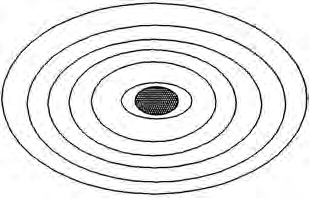
We have to spend more than 2,000,000 years at the speed of light to reach our next-door galaxy. At least 10,000,000,000 years, at the speed of light, must be spent to reach the outer limit of our universe. From the outer limit of our universe, even the Milky Way is like a speck of dust in a large room.
The second universe surrounds our universe. The third universe is larger than the second, and so on. More accurately, our universe should be considered the seventh universe, surrounded by the sixth universe, which is surrounded by the fifth universe, and so on. Can you imagine the vastness of the first, outermost universe? No number exists to describe the circumference of the first universe. This incomprehensible vastness is “within the fist of God’s hand.” From the outer limit of the outermost universe, where is the planet Earth? How significant is it? On the infinitesimal mote called Earth, such minuscule creatures as Mary, Jesus, and Muhammad lived. Yet, some people set up these powerless humans as gods!
God’s greatness is represented not only by the fact that He holds the seven universes in His hand, but also by the fact that He fully controls every atom, even subatomic components, everywhere in the greater universe (6:59, 10:61, & 34:3).
from: Appendix 21, Quran The Final Testament, by Rashad Khalifa, PhD.
In God’s kingdom, certain creatures are necessarily given the powers needed to perform their duties. Satan believed that his God-given powers qualified him to function as an independent god. As evidenced by the prevalence of misery, disease, accidents, and war in his dominion, we now know that Satan is incompetent.
The Quran clearly states that Satan was an angel, by virtue of the immense powers and rank bestowed upon him. This is why he is addressed as an angel (2:34, 7:11, 15:29, 17:61, 18:50, 20:116, 38:71) prior to his fall. By definition, a jinn is a fallen angel (18:50). Satan’s rebellion teaches us that the angels were created with minds of their own, and absolute freedom of choice (2:34).
from: Appendix 27, Quran The Final Testament, by Rashad Khalifa, PhD.
Most people are outraged upon hearing this question. “What do you mean, ‘Who is your god?’ ” they ask. “My god is the Creator of the heavens and the earth.” And most of these people will be shocked to find out that their proclamation that their god is the Creator of the heavens and the earth is no more than lip service, and that they are in fact destined for Hell (12:106).
Your god is whoever or whatever occupies your mind most of the time.
Your god can be your children (7:190), your spouse (9:24), your business (18:35), or your ego (25:43). This is why we note that one of the most important and most repeated commandments in the Quran is:
O you who believe, you shall remember God frequently; glorify Him day and night.
[33:41]
To put this commandment into practice, we must establish certain habits whereby we guarantee that God occupies our minds more than anything else. The Quran helps us establish such soul saving habits:
1. The Contact Prayers (Salat): those who observe the 5 daily prayers come a long way towards commemorating God a significant proportion of their waking hours. Salat helps us remember God not only during the few minutes of prayer, but also throughout the times of anticipation. At 11:00 AM, one may look at his or her watch to see if the noon prayer is due yet. This act causes one to think about God, and one is credited accordingly (20:14).
2. Commemorate God before eating: Verse 6:121 enjoins us to mention God’s name before we eat: “You shall not eat from that upon which God’s name has not been mentioned.”
3. God Willing (IN SHAA ALLAH): “You shall not say, ‘I will do this or that tomorrow,’ without saying, ‘God willing’ (IN SHAA ALLAH). If you forget to do this, then apologize and say, ‘May my Lord guide me to do better next time.’ ” [18:24]. This is a direct commandment that we must carry out, no matter who we are talking with.
4. God’s Gift (MAA SHAA ALLAH): To invoke God’s protection for our beloved objects—our children, our cars, our homes, etc.—we are enjoined in 18:39 to say “MAA SHAA ALLAH” (This is God’s gift).
5. Glorify God day and night: When we eat anything, we shouldn’t be like animals; we must reflect on God’s creation of the food we are eating—the flavor, our enjoyment due to the senses God has given us, the perfect packaging of the banana or the orange, the varieties of sea foods created by God, etc.—and glorify Him as we enjoy His provisions. When we see a beautiful flower, or animal, or sunsets, we must glorify God. We must seize every possible opportunity to remember and glorify God, so that God may be our God.
6. First Utterance: Make it a habit to say: “In the name of God, Most Gracious, Most Merciful. There is no other god besides God,” the moment you wake up every morning. If you establish this good habit, this is what you will utter when you are resurrected.
All of the teachings presented above — about God’s Kingdom, the Qur’an, its verses, the previous scriptures it confirms, and the message of the Messenger of the Covenant — are supported by an extraordinary proof: the Qur’an’s mathematical miracle based on the number 19.
This proof is undeniable, unbreakable, unmatched, easy to understand, yet impossible to imitate. It demonstrates that every word, every letter, and every structure within the Qur’an is divinely placed. This is the first time in religious history that a scripture has been authenticated through a built-in mathematical system of such precision and depth.
Because of this miracle, you can be as certain of these teachings as you are of your own name, your own existence, or the certainty that the sun will rise tomorrow — even more certain. A miracle is beyond human ability. This mathematical system was embedded in a book revealed in a desert society, long before the modern number system had spread from India, and centuries before the existence of computers.
Today, even with the most advanced technology, we struggle to calculate the many interlocking parameters of this system without making mistakes. For example, the number of times the word “Allah” appears, the relationship between its occurrences and the verse numbers, and the connection to their chapters — all of this forms a precise structure that no human being could design.
Muhammad could not possibly have authored such a system. Nor could anyone else. Consider another example: the profound mathematical structure within the Qur’an’s opening statement, the Basmalah. How could a man have composed such a pattern We invite you to examine this evidence about the oppening statement (Basmala) in the following links for yourself and reach your own conclusion.
- Beyond Probability, God's Message in Mathematics. Series 1: The Opening Statement of the Quran (The Basmalah) by Abdullah Arik.
- Also available: Beyond Probability, "The Key" (Al-Fãtehah): God's Message In Mathematics, Amazing mathematical finds on "The Key" (Al-Fãtehah), Sura (chapter) 1
The only reasonable conclusion is that this Book is from God.